
 English

Wetsuit thickness is one of the most important factors when choosing a wetsuit for a toddler in cold water. Neoprene thickness affects thermal insulation, flexibility, and overall comfort, so the right thickness should be selected according to the water temperature and intended activity.
There is no single thickness that works for every cold-water condition. A toddler wetsuit for cold water should be selected based on the actual environment rather than thickness alone.
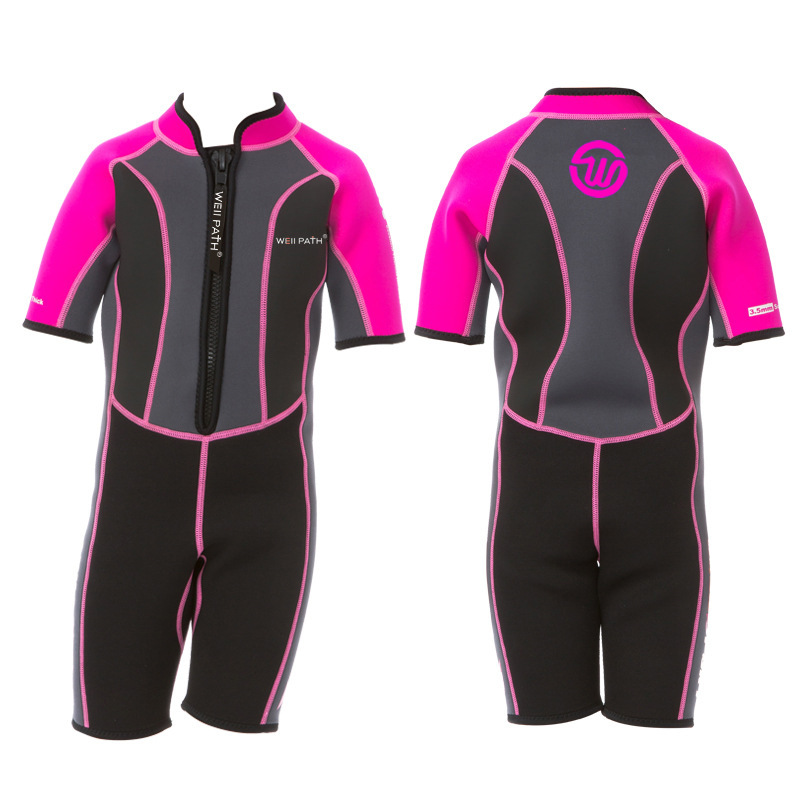
How Does Wetsuit Thickness Affect Warmth?
Wetsuits use neoprene to provide thermal insulation. In general, thicker neoprene provides greater insulation, while thinner neoprene offers more flexibility and is more suitable for relatively warmer water.
For example, a 2 mm wetsuit generally provides less insulation than a 3 mm or 4 mm wetsuit. However, the actual warmth of a wetsuit also depends on its design, fit, seam construction, coverage, and the conditions in which it is used.
Common Wetsuit Thickness Options
| Thickness | General Characteristics | Typical Use |
|---|---|---|
| 1–2 mm | Light insulation and high flexibility | Mildly cool or warmer water |
| 2–3 mm | Balanced insulation and flexibility | Cool-water activities |
| 3–4 mm | Higher thermal insulation | Colder water |
| 4–5 mm+ | Higher insulation with reduced flexibility | Very cold conditions and specialized use |
These ranges are general guidelines rather than fixed temperature standards. The appropriate thickness depends on the specific wetsuit design, water temperature, activity level, exposure time, and other conditions.
What Thickness Is Suitable for a Toddler Wetsuit?
For toddlers, the appropriate wetsuit thickness should be selected according to the water temperature and the expected duration of water exposure.
For relatively mild conditions, a thinner wetsuit may provide sufficient insulation while allowing greater freedom of movement. For colder water, a thicker full-body wetsuit can provide additional thermal insulation.
Because toddlers have different sizes and activity levels, the same thickness may not provide the same experience for every child. Proper fit and full body coverage are also important considerations.
How Does Water Temperature Affect Wetsuit Thickness?
Water temperature is one of the main factors used to determine wetsuit thickness. As the water becomes colder, greater thermal insulation is generally required.
A simplified approach is to consider three conditions:
Cool water: A thinner wetsuit may provide sufficient insulation while maintaining flexibility.
Cold water: A medium-thickness or thicker full wetsuit may be more appropriate.
Very cold water: A thicker wetsuit and additional cold-water protection may be required depending on the activity and conditions.
Parents and buyers should always check the manufacturer's recommended temperature range for the specific wetsuit rather than relying only on thickness.
Does a Thicker Wetsuit Always Mean Warmer?
Not necessarily. Thickness is important, but it is only one factor affecting thermal performance.
A wetsuit's fit, neoprene quality, seam construction, body coverage, and overall design can also affect how effectively it helps reduce heat loss. A poorly fitted thick wetsuit may not perform as expected if excessive water enters through gaps around the body.
Thickness vs. Flexibility
There is generally a trade-off between insulation and flexibility. Thicker neoprene provides more insulation but can feel less flexible, while thinner neoprene allows greater freedom of movement.
This balance is particularly important for toddlers because they may need to move their arms and legs freely while swimming or participating in water activities.
What Else Should You Consider Besides Thickness?
Fit
The wetsuit should fit closely without creating uncomfortable pressure. A suitable fit helps improve thermal performance and allows natural movement.
Coverage
A full-body wetsuit provides more coverage than a shorty wetsuit and may be more suitable for colder water.
Seams
Seam construction can affect water entry and overall thermal performance. Different wetsuits may use flatlock, glued, blind-stitched, or other seam constructions.
Activity Level
A toddler who is actively swimming may generate more body heat than a child spending longer periods with limited movement. The intended activity should therefore be considered when choosing wetsuit thickness.
Exposure Time
Longer exposure to cold water generally requires more attention to thermal protection. The wetsuit should be selected based on the expected duration and conditions of use.
How to Choose the Right Toddler Wetsuit Thickness?
A practical selection process can include the following steps:
Determine the typical water temperature.
Check the manufacturer's recommended temperature range.
Consider the child's activity level.
Determine how long the child will normally be in the water.
Choose an appropriate wetsuit thickness and body coverage.
Check the size and fit before use.
For especially cold conditions, additional thermal protection may be appropriate depending on the activity and environment. Adult supervision and appropriate water-safety practices remain essential whenever toddlers are in or around water.
Conclusion
The right wetsuit thickness for a toddler depends primarily on water temperature, activity, exposure time, fit, and wetsuit construction. Thinner neoprene provides greater flexibility, while thicker neoprene generally provides more thermal insulation.
When choosing a toddler wetsuit for cold water, thickness should therefore be considered together with fit, coverage, seams, material, and the manufacturer's recommended conditions of use.
FAQ
Is a 3 mm wetsuit warm enough for a toddler?
A 3 mm wetsuit may be suitable for some cool or cold-water conditions, but suitability depends on the actual water temperature, wetsuit design, fit, activity, and exposure time. Check the manufacturer's recommended temperature range.
Is a thicker wetsuit always better for cold water?
Not necessarily. A thicker wetsuit generally provides more insulation, but it can reduce flexibility. Fit, coverage, seams, and material quality also affect thermal performance.
What is the warmest wetsuit thickness?
Thicker wetsuits generally provide greater insulation, but the appropriate thickness depends on the intended water temperature and activity. Very thick wetsuits may not be necessary for all cold-water conditions.
Should a toddler wear a full wetsuit in cold water?
A full wetsuit provides greater body coverage and can be suitable for many cold-water conditions. The appropriate design depends on the actual water temperature and intended activity.
Need a Toddler Wetsuit for Cold Water?
We provide toddler wetsuit solutions with different neoprene thicknesses, sizes, coverage options, and designs. Contact us to discuss your product requirements and customization needs.