
 English

Choosing the right Sweat Proof Leggings requires more than checking whether a product is labeled “sweat proof.” Fabric composition, moisture-wicking performance, drying speed, breathability, stretch, fit, and garment construction all affect how leggings perform during exercise.
Whether you are selecting leggings for running, gym training, yoga, HIIT, or an activewear product line, the following factors can help you evaluate different options.
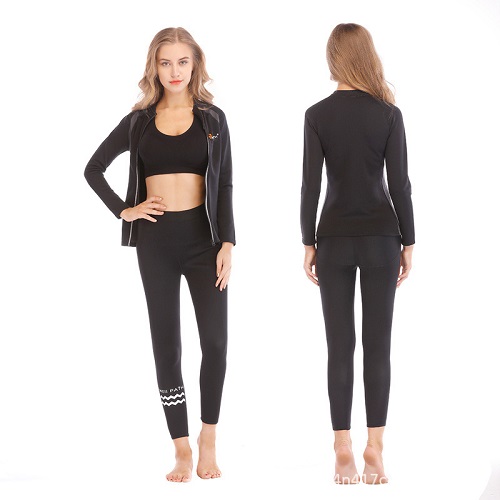
1. Check the Fabric Composition
Start by checking the fabric composition. Performance leggings commonly use polyester, nylon, elastane, or blends of these fibers.
Polyester is widely used for moisture-management applications, while nylon can provide softness, durability, and comfortable stretch. Elastane adds elasticity and helps leggings move with the body.
For activewear applications, the fiber blend should be selected according to the required balance of moisture management, stretch, durability, softness, and recovery.
2. Look for Moisture-Wicking Performance
Moisture-wicking performance is one of the most important factors when choosing Sweat Proof Leggings.
A moisture-wicking fabric helps transport perspiration away from the skin toward the outer surface of the garment, where the moisture can spread and evaporate. This can help reduce the wet and sticky feeling associated with intense workouts.
Do not judge moisture-wicking performance only by the fabric name. Different fabrics with similar fiber compositions can perform differently depending on yarn structure, knitting method, and finishing technology.
3. Consider Quick-Drying Performance
Moisture wicking and quick drying are related but not exactly the same. Wicking moves moisture away from the skin, while drying determines how quickly that moisture leaves the fabric.
For high-intensity workouts, look for leggings that combine effective moisture transport with fast drying. This combination can help maintain a more comfortable wearing experience during extended activity.
4. Evaluate Breathability
Breathability is particularly important when leggings are used in hot environments or during high-intensity exercise.
Breathable fabrics can help release heat and moisture from the body. Some activewear designs also incorporate mesh sections or specialized knit structures to increase airflow in areas where heat and sweat tend to build up.
5. Check Stretch and Recovery
Good sweat proof leggings should allow sufficient movement without losing their shape.
Look for fabrics with adequate stretch and recovery. Four-way stretch is commonly used for fitted activewear because it allows movement in multiple directions.
Recovery is equally important. If the fabric does not return to its original shape after repeated stretching, the leggings may gradually become loose around the knees, hips, or waistband.
6. Check Opacity During Movement
Opacity is another important consideration, especially for leggings used during squats, lunges, stretching, and strength training.
A fabric that appears opaque when standing may become more transparent when stretched. When evaluating leggings, check the fabric under realistic movement and stretching conditions rather than only examining it when relaxed.
7. Pay Attention to Seam Construction
Seam construction can affect both comfort and durability.
Smooth or flat seams can help reduce friction during repeated movement. Reinforced stitching may be useful in high-stress areas such as the crotch, inner thigh, waistband, and side seams.
For high-performance activewear, seam placement should also be considered alongside the garment's intended range of movement.
8. Choose the Right Waistband
The waistband should keep the leggings securely in place without creating excessive pressure.
A high-rise waistband can provide additional coverage, while elastic or structured waistband construction can help prevent excessive movement during running, squats, and other exercises.
For long workout sessions, the balance between support and comfort is particularly important.
9. Consider Fabric Weight
Fabric weight can influence comfort, coverage, warmth, and breathability.
Lighter fabrics may be suitable for warm-weather training and activities where airflow is important. Medium-weight fabrics can provide a balance between coverage and performance, while heavier fabrics may be more suitable for colder environments or compression-focused applications.
There is no single fabric weight that works for every type of sweat proof leggings. The intended activity and climate should guide the selection.
10. Consider Color and Sweat Visibility
If reducing visible sweat marks is important, color and surface appearance should also be considered.
Dark colors and certain patterns can make moisture marks less noticeable. For activewear collections designed for high-intensity workouts, brands may evaluate how the fabric looks both when dry and after exposure to moisture.
11. Match the Leggings to the Activity
Different activities have different performance requirements.
Running: prioritize moisture wicking, quick drying, breathability, stretch, and a secure fit.
HIIT: focus on moisture management, airflow, stretch, and durable construction.
Strength Training: consider stretch, recovery, opacity, and seam durability.
Yoga: prioritize flexibility, softness, comfort, and opacity.
Cycling: consider stretch, moisture management, fit, and abrasion resistance.
Outdoor Training: evaluate fabric weight, breathability, drying speed, and environmental conditions.
12. Evaluate Durability and Care Requirements
Sweat proof leggings may be exposed to frequent washing, stretching, friction, and perspiration. Durability should therefore be considered when selecting a product for regular use or commercial activewear collections.
Look at resistance to pilling, color fading, shrinkage, seam damage, and loss of elasticity. The fabric should also be compatible with the expected washing and care requirements.
Key Specifications to Compare
When comparing sweat proof leggings, buyers and activewear brands can evaluate the following specifications:
Fabric composition
Moisture-wicking performance
Quick-drying performance
Breathability
Stretch percentage
Fabric recovery
Fabric weight
Opacity under stretch
Seam construction
Waistband design
Color and surface appearance
Durability
Care requirements
Available sizes
Customization options
Conclusion
Choosing sweat proof leggings is mainly about matching fabric performance and garment construction with the intended activity. Moisture-wicking capability, quick drying, breathability, stretch, recovery, opacity, seam construction, and waistband stability should all be considered.
For activewear manufacturers, wholesalers, and brands, evaluating these specifications systematically can make it easier to develop or source sweat-resistant leggings for different sports, climates, and customer requirements.