
 English

The main difference between men's and women's wetsuits is the pattern and fit used to accommodate different body shapes. Men's wetsuits are generally designed with broader shoulders and a straighter torso, while women's wetsuits often provide more room around the hips and bust with a more shaped waist.
However, body shapes vary significantly from person to person. The most important factor is a close, comfortable fit rather than simply choosing a wetsuit based on the gender label.
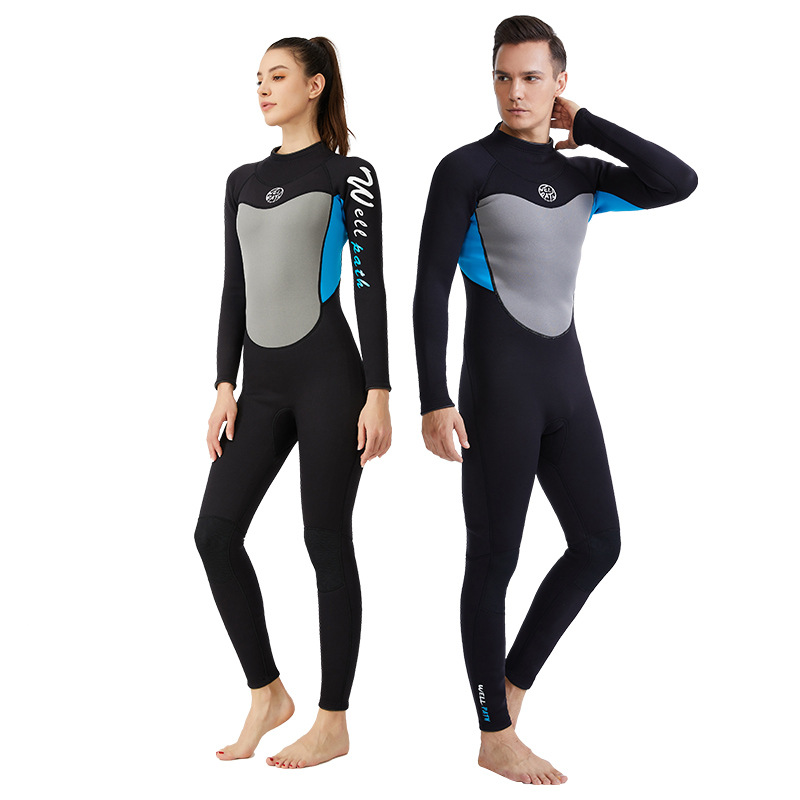
How Are Men's and Women's Wetsuits Different?
| Feature | Men's Wetsuit | Women's Wetsuit |
|---|---|---|
| Shoulders | Generally broader | Generally narrower |
| Torso | Often straighter | Often more shaped |
| Waist | Straighter pattern | More defined waist area |
| Hips | Straighter hip profile | More room around the hips |
| Chest | Straighter chest construction | May include additional bust shaping |
Why Is Wetsuit Fit Important?
A wetsuit works best when it fits closely to the body. A proper fit helps reduce unnecessary water circulation inside the suit while allowing enough flexibility for swimming, surfing, diving, and other activities.
A wetsuit that is too loose may allow more water movement and reduce thermal efficiency. A wetsuit that is too tight can restrict movement and create discomfort. This is why body measurements and pattern design are important when developing wetsuits for different users.
Are Men's and Women's Wetsuits Made from Different Materials?
Not necessarily. Both men's and women's wetsuits can be manufactured using similar neoprene materials. The key differences are usually related to pattern design, sizing, thickness distribution, construction, and styling rather than the basic material itself.
Depending on the intended application, manufacturers can use different neoprene thicknesses and fabric laminations to achieve the required balance of warmth, flexibility, stretch, and durability.
Can Men Wear Women's Wetsuits or Women Wear Men's Wetsuits?
Yes. There is no technical rule that prevents someone from wearing a wetsuit marketed for another gender. The main consideration is whether the suit provides a suitable fit and allows comfortable movement.
For example, a woman with a straighter body shape may find a men's wetsuit more suitable, while a man with a particular body shape may prefer a women's pattern. Measurements should always take priority over the gender label.
How to Choose the Right Wetsuit Fit?
Check body measurements: Compare height, chest, waist, and hip measurements with the manufacturer's size chart.
Consider torso length: A suitable torso length helps prevent excessive pulling or loose areas.
Check shoulder mobility: The suit should allow natural arm movement.
Check the neck area: The collar should provide a secure fit without excessive pressure.
Consider activity: Surfing, swimming, diving, and other activities may require different patterns and flexibility.
Choose suitable thickness: Thickness should match the water temperature and intended use.
Men's and Women's Wetsuits for Different Applications
Wetsuits can be developed for a wide range of applications, including surfing, swimming, snorkeling, diving, paddle sports, and recreational water activities. Each application may require a different combination of coverage, thickness, stretch, and reinforcement.
For active sports, flexible panels around the shoulders and arms can improve mobility. For colder conditions, additional thickness and coverage can provide greater thermal insulation.
Custom Wetsuit Solutions for B2B Buyers
For wetsuit brands, wholesalers, distributors, and sporting goods companies, men's and women's wetsuits can be developed according to specific target-market requirements. Custom manufacturing may include patterns, sizes, neoprene thickness, colors, prints, logos, labels, zippers, seams, and packaging.
Manufacturers can also develop different size ranges and body patterns for specific markets. This allows buyers to offer wetsuits that provide a better fit for their target customers instead of relying only on standard sizing.
Conclusion
The main difference between men's and women's wetsuits is their body-shape-oriented pattern and fit. Men's designs generally provide a straighter and broader fit, while women's designs often include more shaping around the waist, hips, and bust.
For both men and women, the right wetsuit should provide a close fit, sufficient flexibility, and suitable thermal protection. For B2B buyers, custom patterns and sizing can provide more flexibility when developing wetsuits for specific markets and applications.